POS Machine or POS Software? What "POS" Means in Lebanon
In Lebanon, "POS" can mean the bank's card machine or the till software that runs the shop. What each one does, how the two work together, and what to ask for.
4 min read
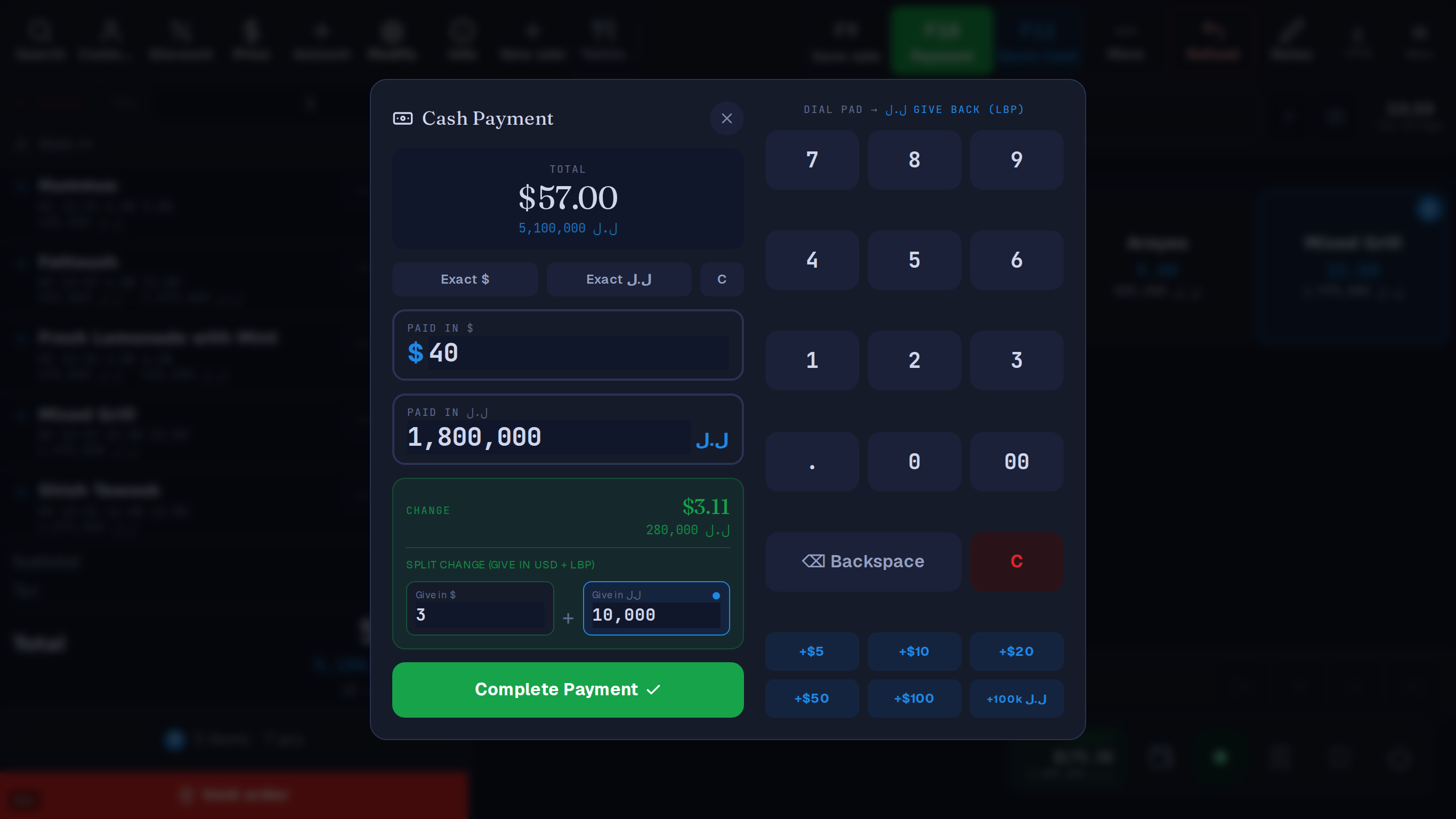
Ask for a POS in Lebanon and you can get two different things. A bank hears "POS machine": the card terminal a shop gets from its bank so customers can pay by card. A software company hears "POS system": the till at the counter that rings up sales, keeps the stock and closes the day.
Both are called POS, they do different jobs, and a shop that takes cards and wants to know what it sold usually needs both. This guide sorts out which is which.
The POS machine: the bank's card terminal
#A card terminal does one job: it takes a card payment and sends the money to the shop's bank account. It comes from a bank or a payment company, with that company's fees and its own end-of-day settlement slip.
What it does not know is what was sold. Its slip lists amounts, not products: nothing about stock, about which cashier was on, or about the half of the bill that was paid in cash.
The POS system: the software that runs the counter
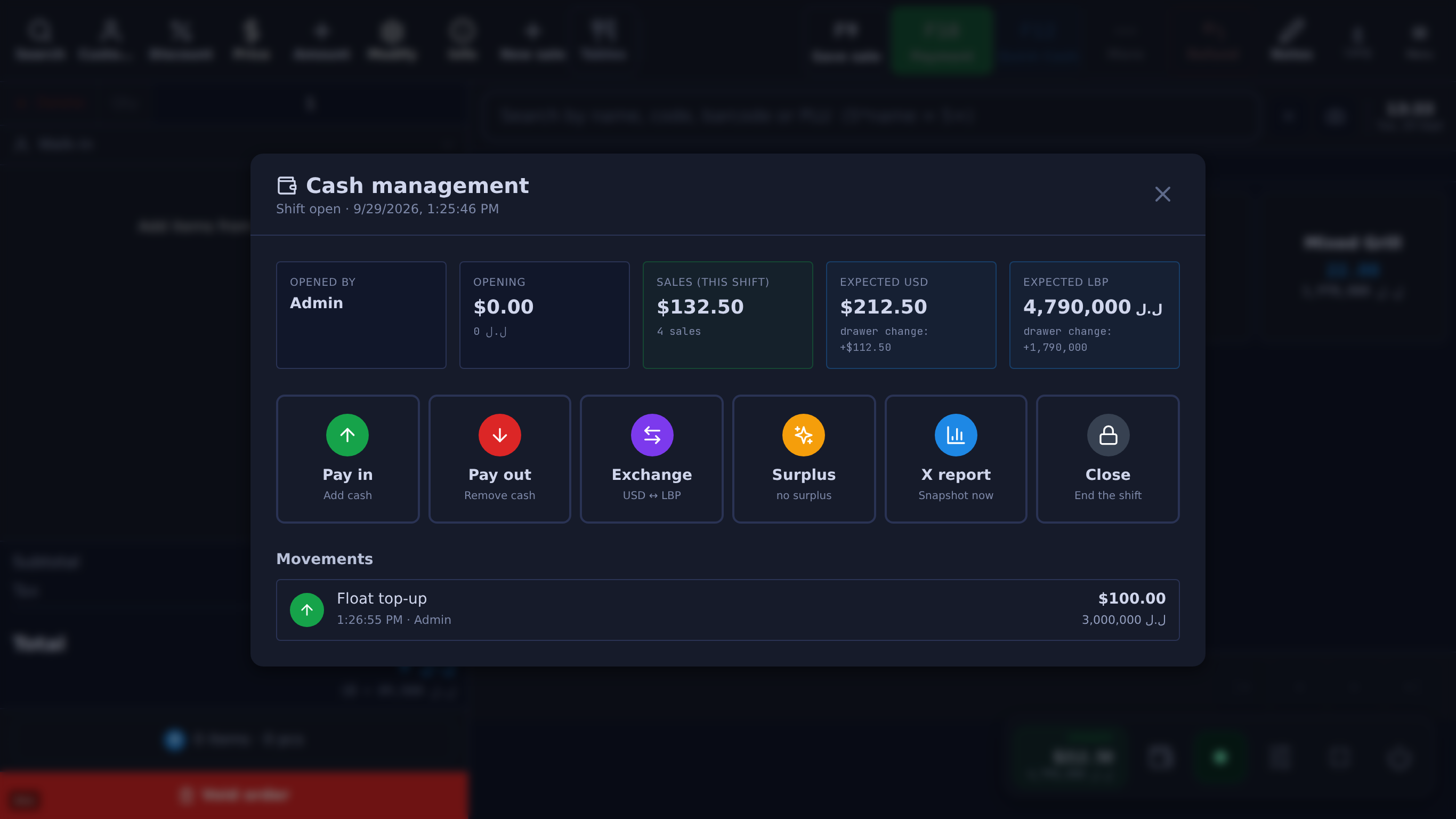
#A POS system is the software at the counter: products and prices, the cart, the receipt, stock that goes down with each sale, cash shifts with X and Z reports, customers and their credit, and reports on what sold. Table is one: it runs on a Windows PC or laptop, in dollars and lira, and keeps selling when the internet drops. Its feature reference lists everything it does.
It does not move money by itself. Cash goes in the drawer, a Whish or OMT transfer goes to the shop's wallet, and a card payment goes through the card machine.
How the two work together
#The cashier rings the sale on the till and picks how it was paid: cash, card, Whish, OMT or Neo, or a split between them. For a card, the customer pays on the bank's machine as usual, and the till records that this sale, or this part of it, was paid by card.
Table does not connect to the card machine and does not process the payment: the money goes from the machine to your bank as it always did, and Table takes no cut of it. It also means the cashier enters the card amount on the till; nothing sends it across from the machine.
Matching them at the end of the day
#Because the till records every card sale, its Sales by payment method report shows the day's card takings apart from the cash, and the card machine's settlement slip should show the same total. When they differ, a card sale was usually rung as cash, or the other way round, and that is easier to find the same evening than at the end of the month.
The X and Z reports do the same job for the cash drawer, in both currencies.
Which one do you need?
#- Cash only, a few products, no stock to track: a cash register or a notebook may still be enough. POS vs a cash register goes through when it stops being enough.
- Customers who want to pay by card: a card machine from your bank. On its own it tells you how much came in by card, not what sold.
- Stock, staff, credit customers, two currencies: a POS system. If you also take cards, the card machine sits beside it.
What to ask when someone offers you a "POS"
#The buying guide goes through the software questions in more detail. Table's prices are on its pricing page: the licence is $10 a month or $100 a year per till, with no cut of your sales, and the installed bundles start at $150, with installation and training anywhere in Lebanon at the same price (by city).