
01
Works with label-printing scales
The scale prints a barcode carrying the weight or the price, and the till reads it straight off — no manual price entry, no separate workaround.
A bakery sells by the gram, bakes fresh every day and loses money the moment something goes unsold. Table is built around that, not adapted to it.
Made in Lebanon USD + LBP on every sale 14-day free trial, no card
The problem
Bread and pastries go by the gram, so selling by weight has to be built into the till, not bolted on. Otherwise someone is doing the sums by hand at the counter.
Unsold bread and pastries at the end of the day are pure loss — but without real waste tracking, you’re guessing at how much you’re losing every week.
A dozen similar-looking pastries, all needing a fast PLU lookup during a morning rush — a slow or confusing code system means mistakes at checkout.
The real screens
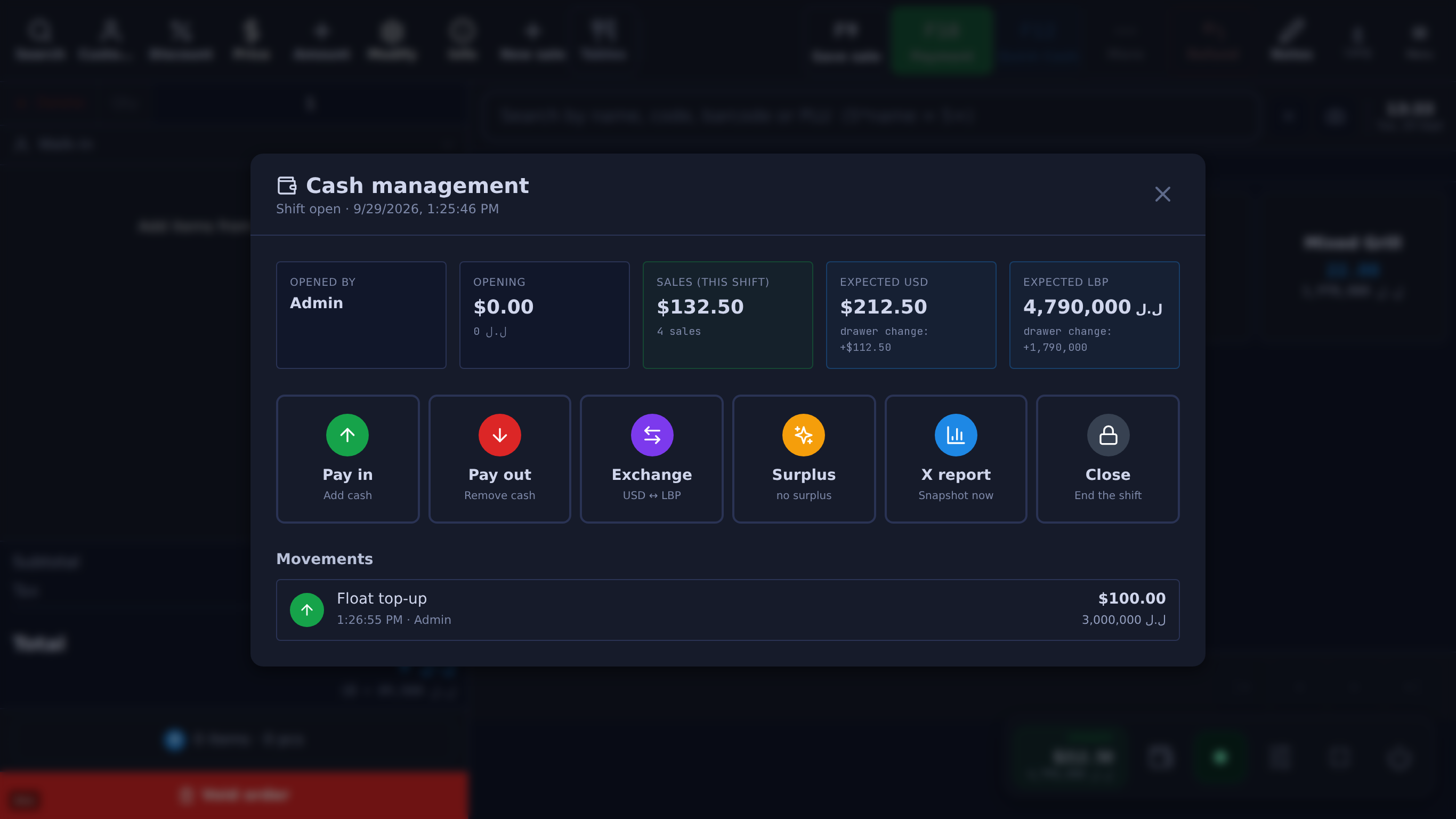
Unedited captures of Table, taken in a fictional demo shop. Open one to see it full size.
Built for this
01
The scale prints a barcode carrying the weight or the price, and the till reads it straight off — no manual price entry, no separate workaround.
02
Set a default identifier type in Settings so every new item is barcode or PLU by default, changeable per item when it isn’t.
03
Log unsold stock as waste in the same flow as any other stock movement, so end-of-day loss is a real number, not a shrug.
04
Flour, yeast, butter — each sale of a recipe item deducts its ingredients, so you know your true cost per loaf, not just per sale.
05
Lose the connection at 6am and the till keeps ringing sales, which sync when it’s back. Offline sales still print their receipt and open the cash drawer; refunds and the Z-report wait for the connection.
USD + LBP
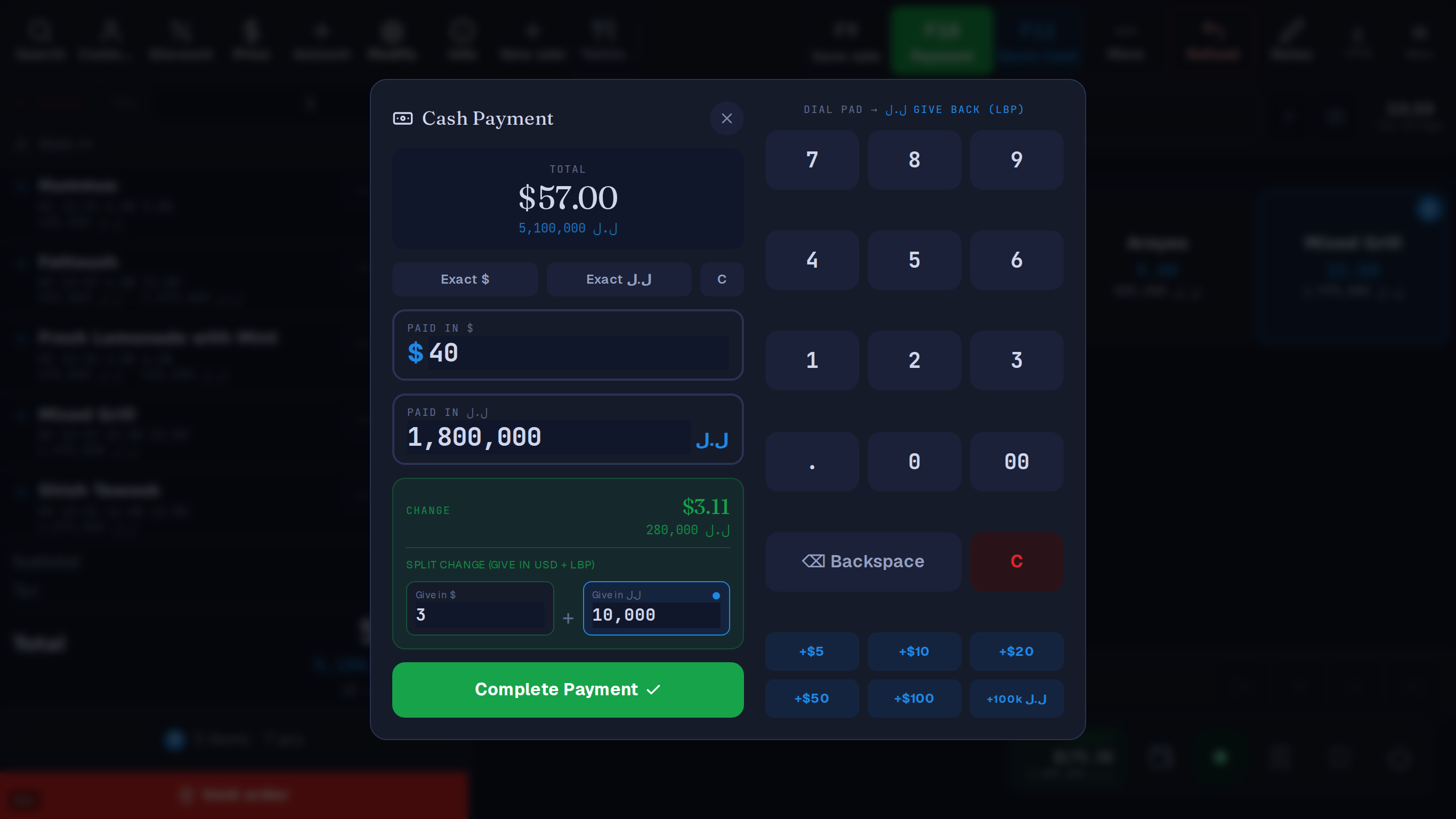
Price by the piece or by the kilo in dollars, and take lira or dollars at the counter.
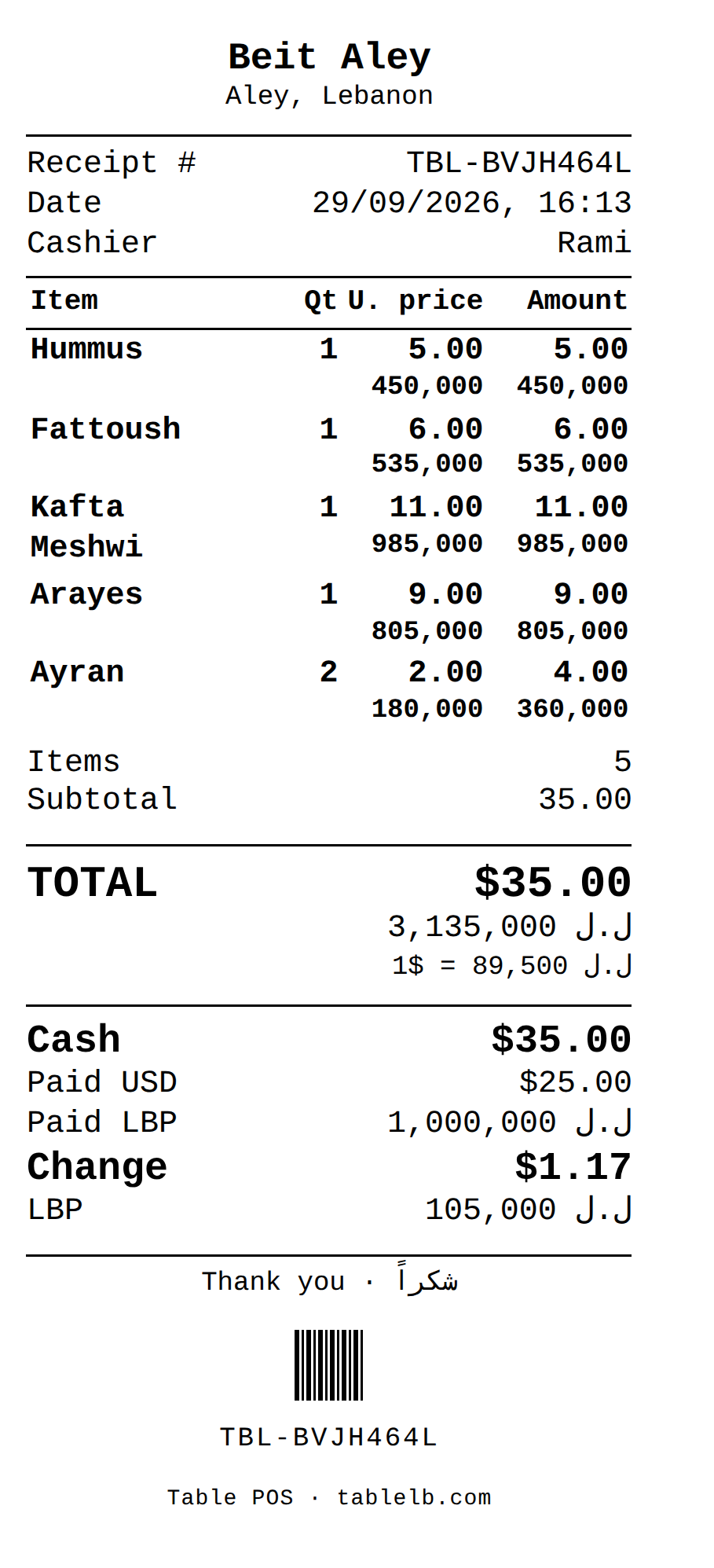
Every sale stores the rate it used and is kept in dollars, so past dollar totals don’t move with the lira. Lira shown to the customer is rounded to the 5,000 note.
A $ bill. They hand you $ and ل.ل.
For example, give $3 — the till fills in 10,000 ل.ل
or 280,000 ل.ل all in lira
The cashier picks how many dollars to give back; the till works out the lira.
Lira price 5,100,000 ل.ل
Example rate: 89,500 ل.ل per $1. Your till uses the day's rate from lirarate.org or one you set. How dual currency works
Questions
Yes. Weighed items move stock by the actual weight sold, not by the piece, so a kilo sold takes a kilo off — the count and the shelf stay in agreement.
Waste comes off stock as its own movement rather than vanishing, so the end-of-day difference between baked and sold is a number you can look at instead of a guess.
Yes. Products built from ingredients carry their current cost, so when flour moves you update it once and every item made from it reprices its margin.
Yes. Arabic or English, chosen per device and per cashier, so an Arabic-speaking cashier and an English-speaking manager can share one till. Receipts print in the language the till is in.
What it costs
One Windows till with every feature not marked as an add-on on /features, the owner phone app, and support on WhatsApp.
Sign up yourself, or message us on WhatsApp and we’ll set it up with you.
14 days free · no credit card
What happens next
01
Your shop’s name and your mobile number. The shop and its PIN are created on the spot.
02
The till runs in the Table app for Windows. Download it
03
Click Download on the signup screen and the app picks up the 6-character pairing code shown when you sign up (valid 24 hours) when it opens on the same computer; anywhere else, enter the code. After 24 hours, message Table on WhatsApp for a new one.
Help installing? WhatsApp +961 81 664 397tableposlb@gmail.com


