01
IMEI and warranty on the sale
Attach the serial number and the warranty period to the line as you ring it. When the customer comes back, the sale, the date and the cover are all on record.
A phone shop sells one item worth hundreds and fifty worth a dollar, and the expensive one comes back asking about warranty. Table records the serial on the sale, so the answer takes a second.
Made in Lebanon USD + LBP on every sale 14-day free trial, no card

The problem
A customer comes back with a handset and a story. Without the IMEI tied to the sale, you’re taking their word for when they bought it and what it cost.
Cables, cases and chargers are small, numerous and easy to lose track of. Nobody notices a slow leak until the count at the end of the year.
A repair gets paid when the customer collects, a regular settles at the end of the month, and meanwhile that money exists only in someone’s memory.
The real screens
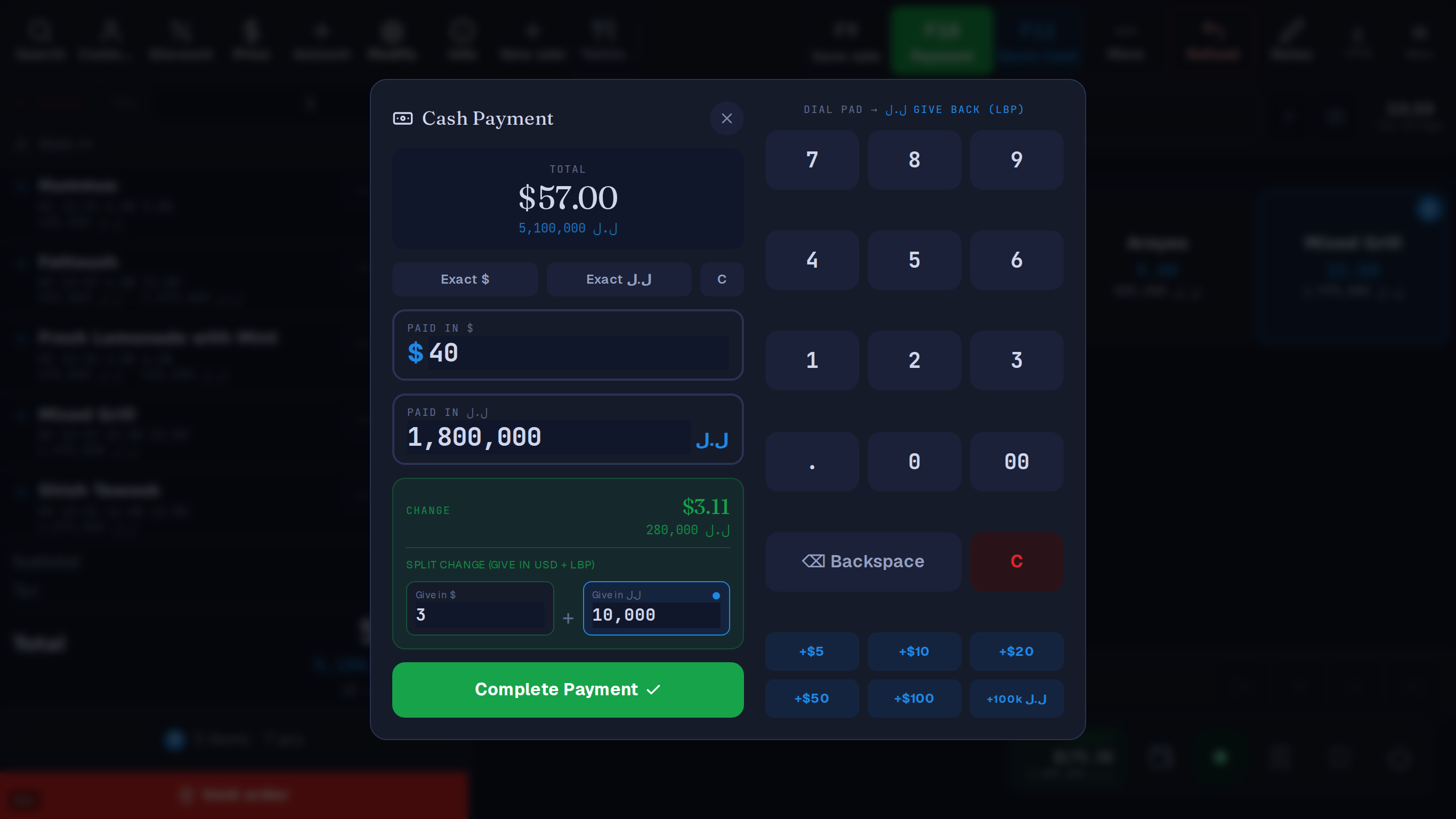
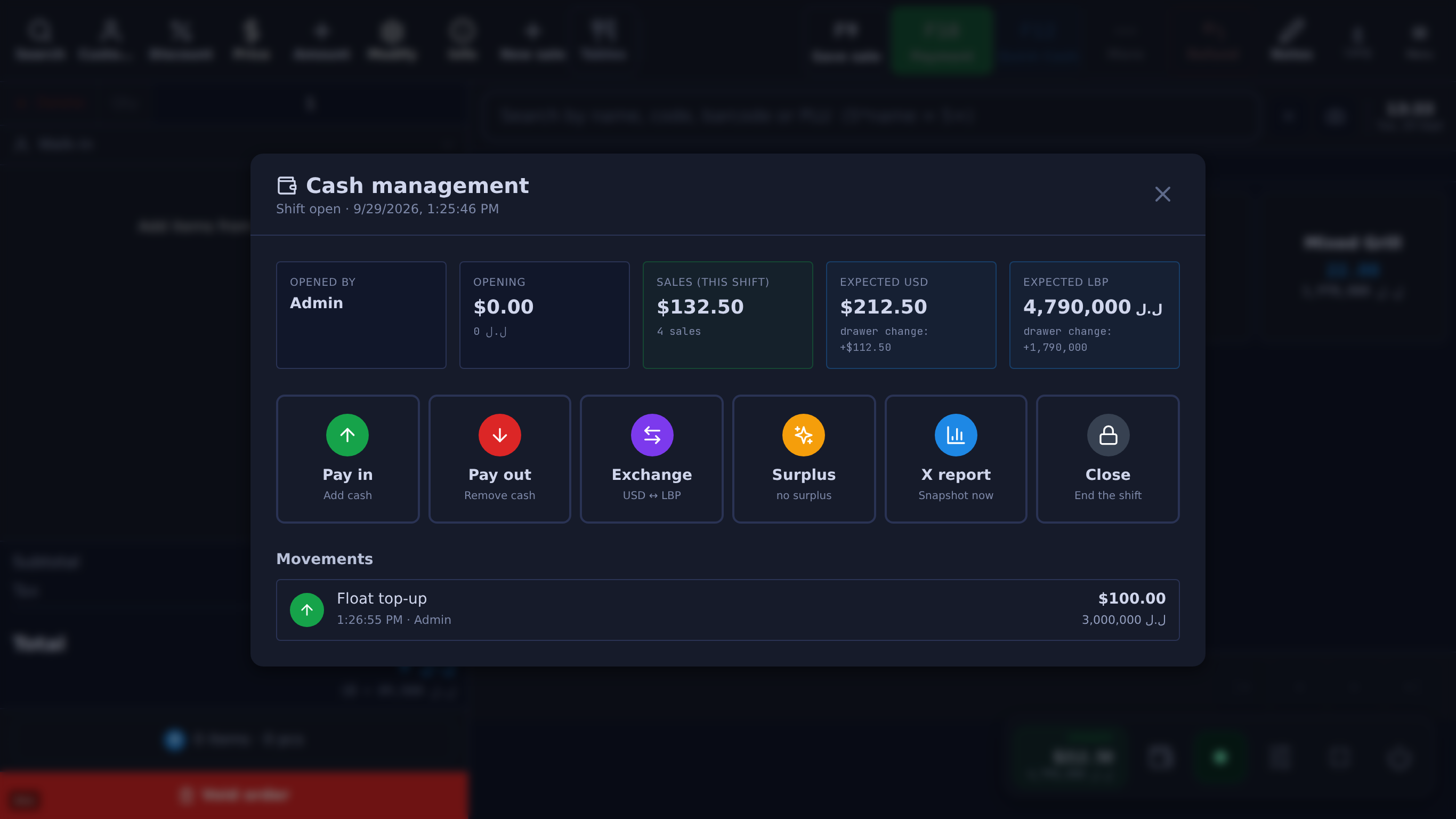
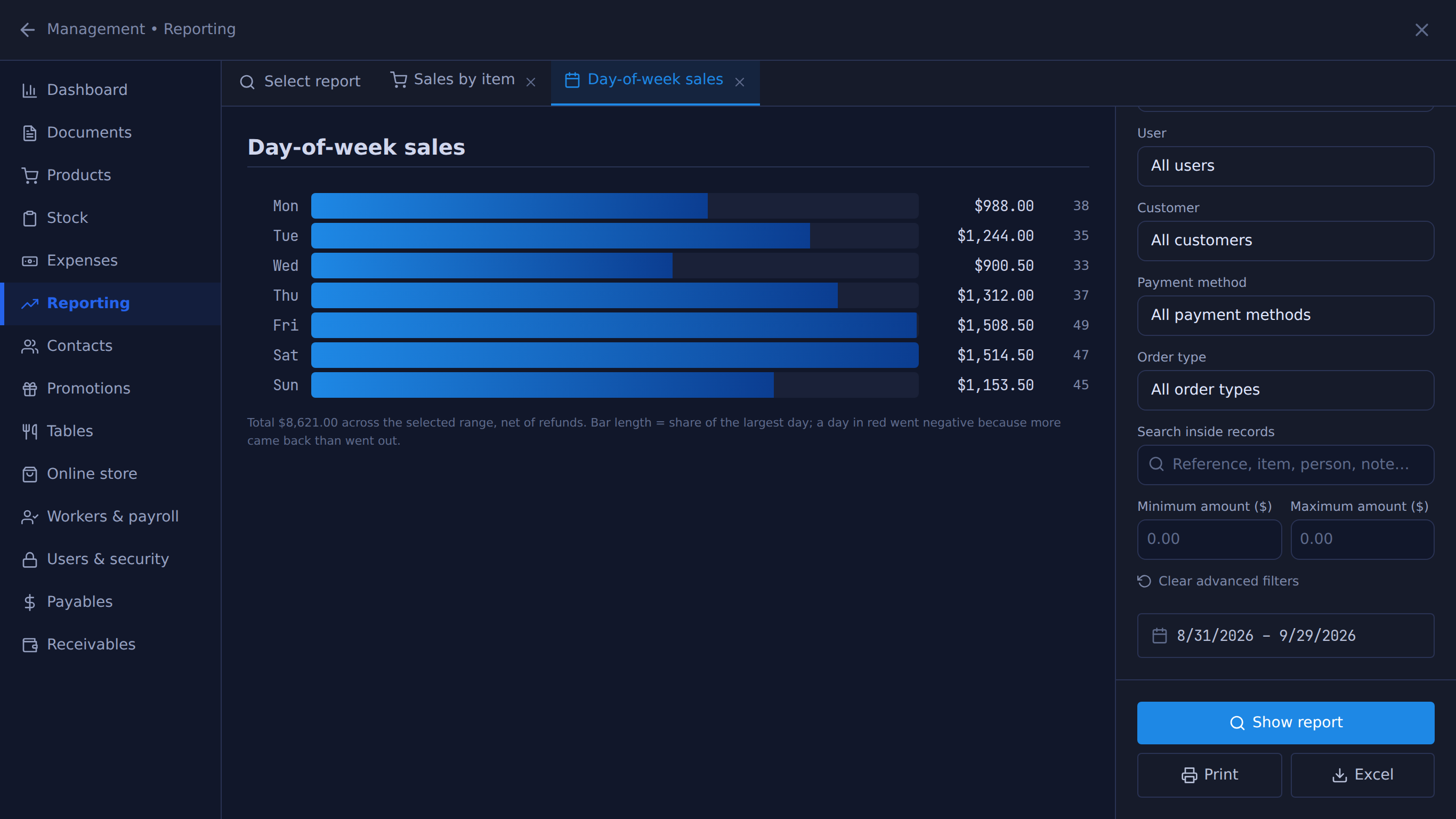
Unedited captures of Table, taken in a fictional demo shop. Open one to see it full size.
Built for this
01
Attach the serial number and the warranty period to the line as you ring it. When the customer comes back, the sale, the date and the cover are all on record.
02
Scan cables, cases and screens like any other stock item, with several barcodes per product for when the supplier changes packaging.
03
Ring the repair as a service, leave it unpaid on the customer’s account and settle it when they collect, in dollars or lira.
04
Up to three price tiers per product, so the shop next door buying ten cases doesn’t pay the walk-in price — switched per sale or per line.
05
One product, many versions — ‘128 GB Black’, ‘256 GB Blue’ — each with its own price and its own stock count. Variations have no barcode of their own, so scan the product and tap the version.
06
Track your Alfa and Touch lines and balances, and record credit transfers and recharge-card sales with each operator’s fees. It’s a ledger — it doesn’t connect to the operators.
USD + LBP
Quote the handset in dollars and take it in lira, dollars or both.
Every sale stores the rate it used and is kept in dollars, so past dollar totals don’t move with the lira. Lira shown to the customer is rounded to the 5,000 note.
A $ bill. They hand you $ and ل.ل.
For example, give $3 — the till fills in 10,000 ل.ل
or 280,000 ل.ل all in lira
The cashier picks how many dollars to give back; the till works out the lira.
Lira price 5,100,000 ل.ل
Example rate: 89,500 ل.ل per $1. Your till uses the day's rate from lirarate.org or one you set. How dual currency works
Questions
Yes. The serial is recorded on the sale, so six months later a warranty question is a lookup rather than a search through a notebook.
Warranty is attached to the sold item with its serial, so you can see what was sold, when, to whom, and whether it’s still covered.
Yes, with the phone shop module switched on in Settings. It tracks your Alfa and Touch lines and balances and records credit transfers and recharge-card sales with each operator’s fees. It’s a ledger; it doesn’t connect to the operators, and offline the till blocks phone-shop products.
Yes — one item worth hundreds and fifty worth a dollar sit in the same catalogue, with barcodes on the small stuff and serials on the big.
No repair tickets or device check-in — ring the repair as a service and leave it on account.
Yes, through the customer credit ledger — what’s outstanding is recorded against them and settled in either currency whenever they come back.
What it costs
One Windows till with every feature not marked as an add-on on /features, the owner phone app, and support on WhatsApp.
Sign up yourself, or message us on WhatsApp and we’ll set it up with you.
14 days free · no credit card
What happens next
01
Your shop’s name and your mobile number. The shop and its PIN are created on the spot.
02
The till runs in the Table app for Windows. Download it
03
Click Download on the signup screen and the app picks up the 6-character pairing code shown when you sign up (valid 24 hours) when it opens on the same computer; anywhere else, enter the code. After 24 hours, message Table on WhatsApp for a new one.
Help installing? WhatsApp +961 81 664 397tableposlb@gmail.com


