POS vs a Cash Register: What Actually Changes
A cash register records that money came in. A POS records what was sold, by whom, at what cost. When the upgrade is worth it, and when it isn't.
3 min read
Plenty of shops in Lebanon run perfectly well on a cash register and a notebook. If that is you, this is not an article telling you that you are doing it wrong. It is an article about what the difference actually is, so the decision is an informed one rather than a sales pitch.
The difference in one sentence
#A cash register records that money came in. A point-of-sale system records what was sold.
Everything else follows from that. A register can tell you how much the drawer took today. It cannot tell you that a third of it was one product sold at a loss because the cost went up and the shelf price did not.
What you get that a register cannot give you
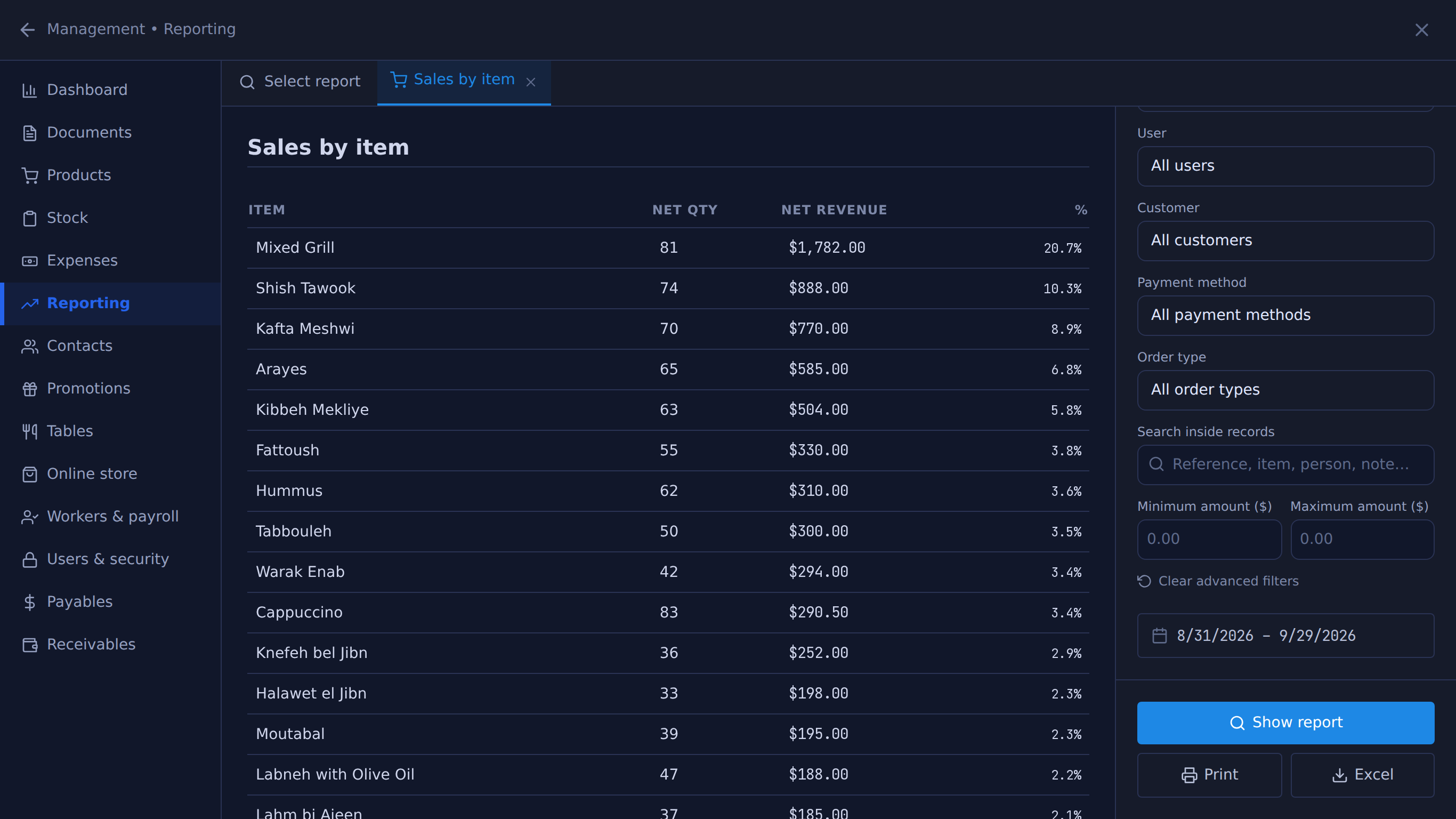
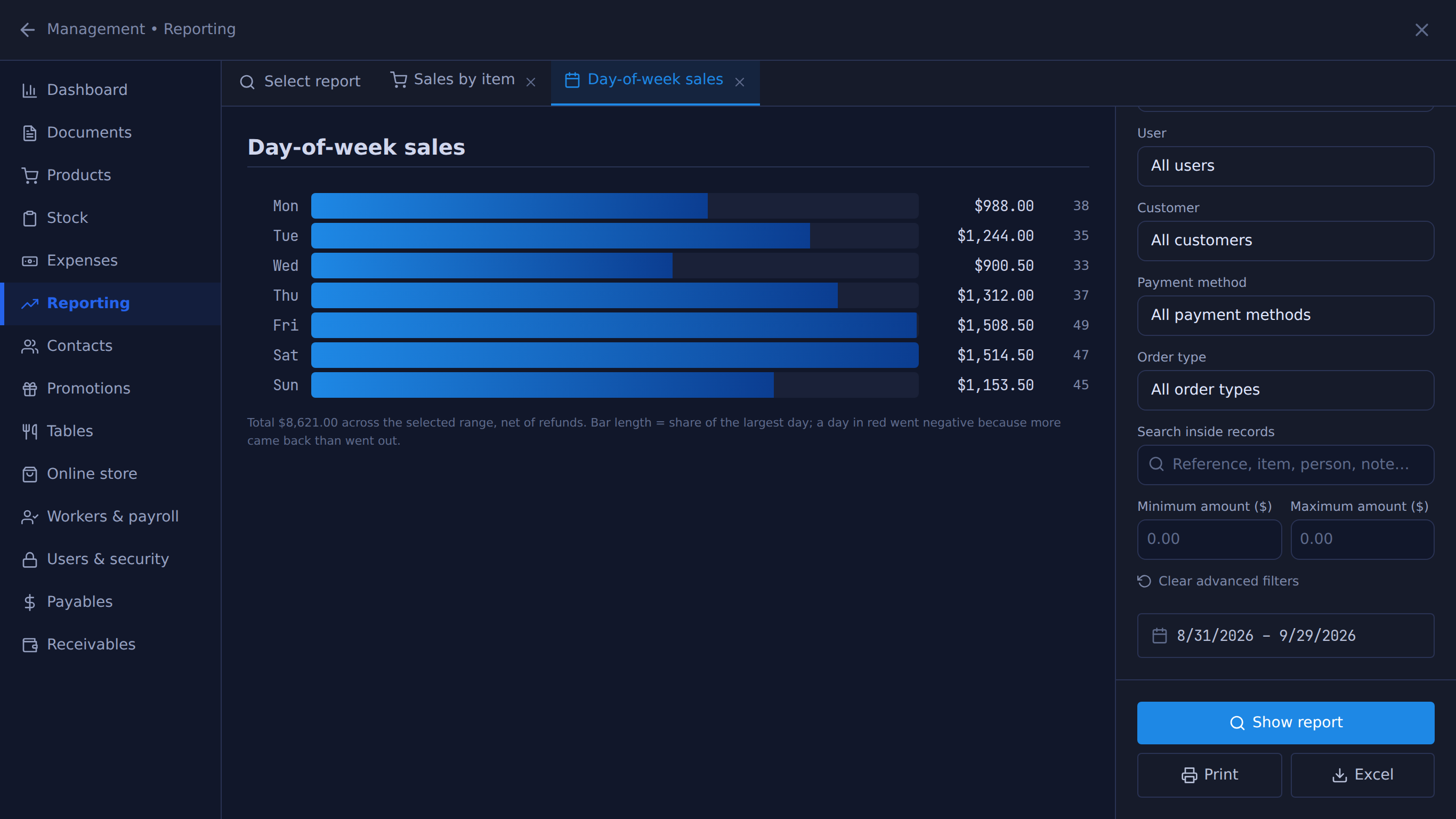
#Stock that moves by itself, because the system knows which item left. Margin per product, because cost is attached to the thing sold rather than to the invoice it arrived on. Sales by hour and by staff member, which is how you find out that the quiet afternoon shift sells more than you thought.
And a record you can search. "What did that customer buy in March" is a question a register cannot answer at all.
When a register is genuinely fine
#If you sell a handful of product lines, buy at prices that do not move, and can hold your stock in your head, a register does the job and a POS is overhead you do not need.
The honest test is not size, it is variety and volatility. A kiosk selling twenty things is fine. A mini-market selling two thousand, at prices that change with the rate, is not — not because the register is bad, but because nobody can hold that in their head, and the gap shows up as stock you cannot account for.
The tipping points
#Three moments usually decide it. The first is when stock starts going missing and you cannot tell whether it was theft, waste or a mistake at the counter — a register gives you no way to distinguish them. The second is when someone else starts working the till and you need to know who did what. The third is when your costs start moving faster than your price list, and you realise you no longer know which products are actually profitable.
If none of those has happened, you probably do not need this yet. If two of them have, the notebook is already costing you more than the software would.
What the upgrade costs you, honestly
#Time, mostly, and it is front-loaded. Somebody has to get the products in with their prices and costs, and the first week is slower while staff learn where things are. Importing an existing product list removes most of that, but not all.
Set against that: the ongoing fee, and a receipt printer if you want one. The question is not whether a POS costs more than a register — it does — but whether what it tells you is worth more than the difference. For a shop that has hit two of the three tipping points, it usually is. For one that has hit none, it usually is not.