01
Sell straight off the scale
Weighed cuts carry a PLU. The scale prints the barcode, the till reads the weight or the price, and the line rings correctly the first time.
A butcher’s prices move with the market, half the counter is sold by weight, and the regulars pay at the end of the month. Table is built for exactly that, in dollars and lira.
Made in Lebanon USD + LBP on every sale 14-day free trial, no card

The problem
Meat prices move with the shipment and the rate. Editing every cut one at a time, on the shelf and on the till, eats the morning — so it doesn’t get done and you sell at yesterday’s price.
A till that only understands ‘one item, one price’ is useless at a counter where nothing is a whole unit and every customer asks for a different amount.
Regulars take meat now and settle later. When it’s written in a book, nobody knows who owes what until you sit down and add it up — and one lost page is real money.
The real screens
Unedited captures of Table, taken in a fictional demo shop. Open one to see it full size.
Built for this
01
Weighed cuts carry a PLU. The scale prints the barcode, the till reads the weight or the price, and the line rings correctly the first time.
02
The bulk price tool changes a whole group of products in one action, so the morning’s new prices are on the till and the customer menu before you open.
03
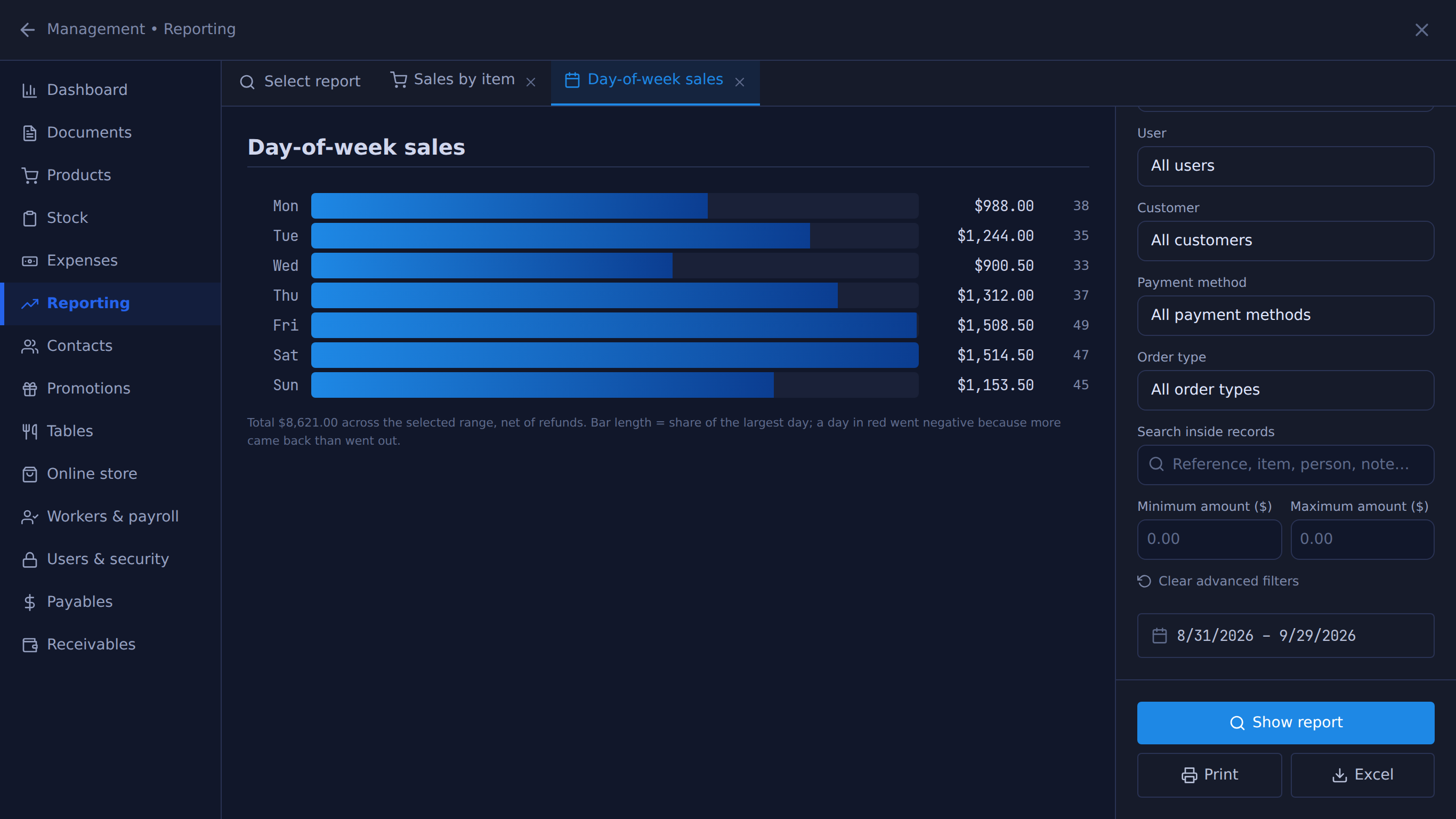
Kafta, awarma, fillet, mince — each with its own cost and price, so you know which cut is making money instead of averaging the animal.
04
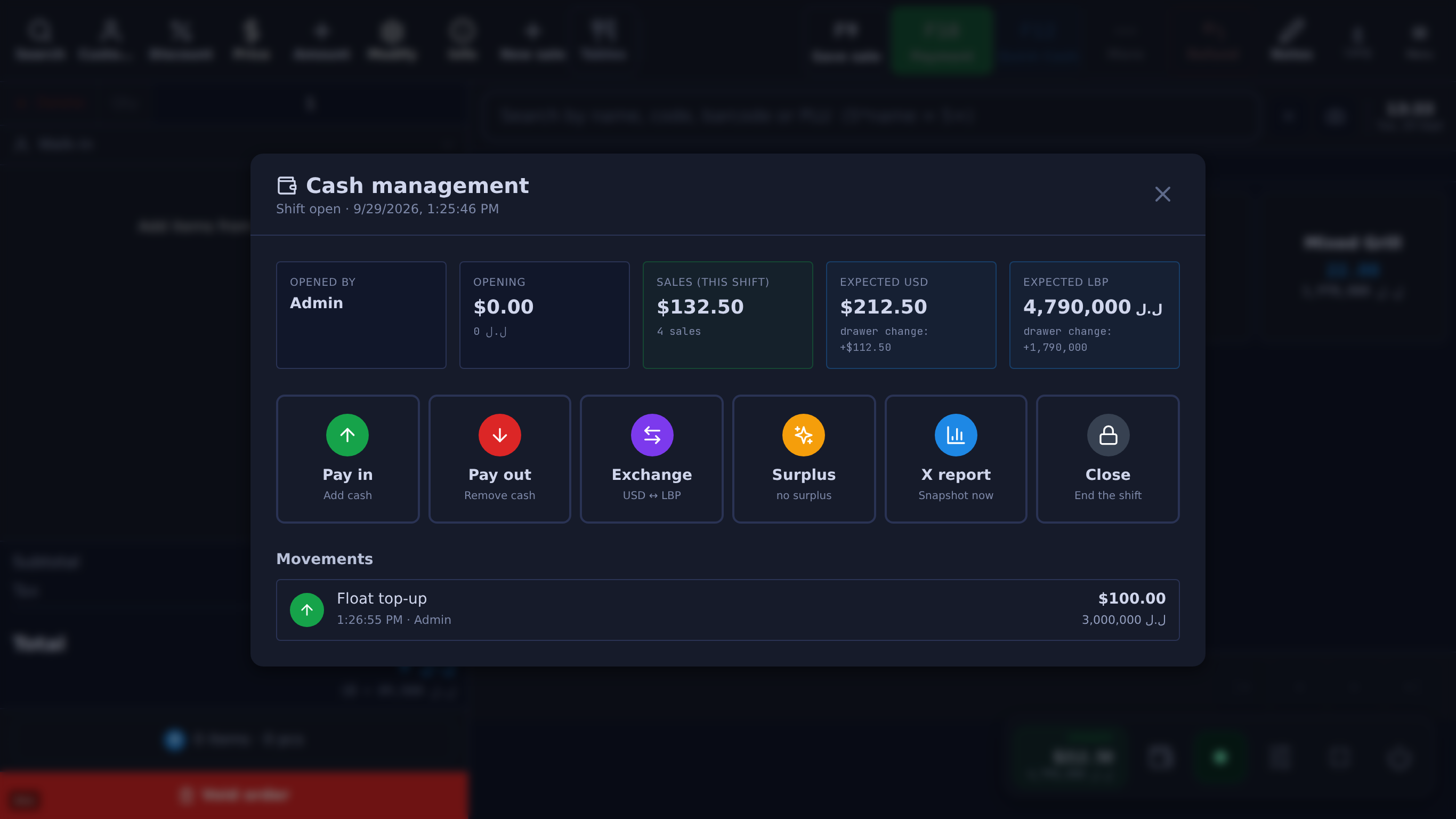
Put a sale on a customer’s account, take a payment against it later, see who owes what and how long it’s been. Write-offs and part-payments are handled, with a full history.
05
Record what you bought from each supplier and what’s still owed on it, so the payable side is as clear as the receivable side.
USD + LBP
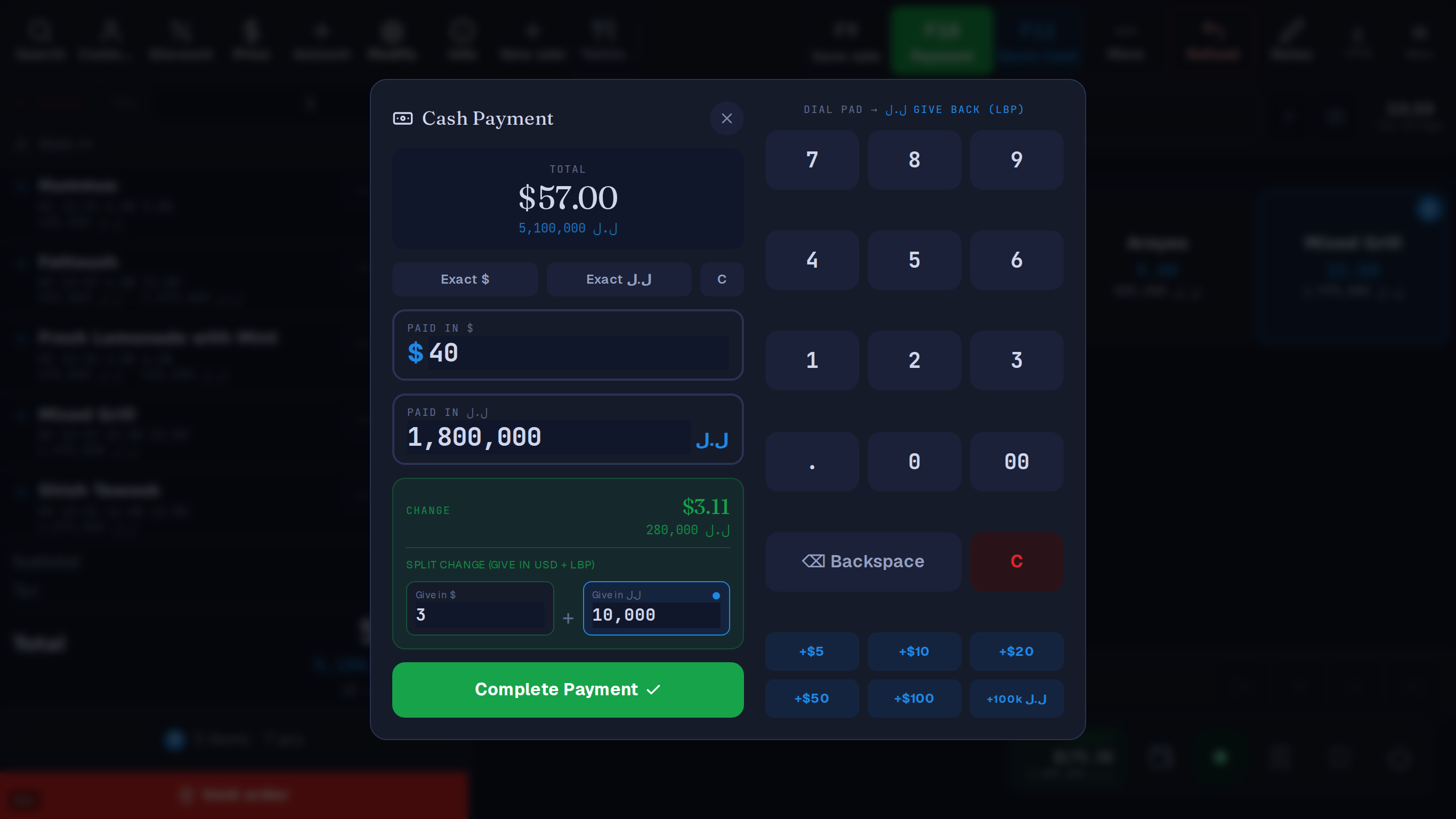
Price by the kilo in dollars, take lira, give change in either.
Every sale stores the rate it used and is kept in dollars, so past dollar totals don’t move with the lira. Lira shown to the customer is rounded to the 5,000 note.
A $ bill. They hand you $ and ل.ل.
For example, give $3 — the till fills in 10,000 ل.ل
or 280,000 ل.ل all in lira
The cashier picks how many dollars to give back; the till works out the lira.
Lira price 5,100,000 ل.ل
Example rate: 89,500 ل.ل per $1. Your till uses the day's rate from lirarate.org or one you set. How dual currency works
Questions
Yes. Weighed cuts take the real weight off stock. For items you also sell by the piece, set them up as their own product with their own count.
Each customer has a credit ledger — what they took, what they’ve paid, what’s outstanding. Settle it partly or fully, in either currency, and the history stays.
As often as you like — change it once and the till and the customer menu follow; reprint the shelf labels for the cuts you changed. The sale records the price and rate at the moment it happened.
Yes, if cost is on the product. Margin is calculated per item from what you paid, so you find out on the day rather than at the end of the month.
What it costs
One Windows till with every feature not marked as an add-on on /features, the owner phone app, and support on WhatsApp.
Sign up yourself, or message us on WhatsApp and we’ll set it up with you.
14 days free · no credit card
What happens next
01
Your shop’s name and your mobile number. The shop and its PIN are created on the spot.
02
The till runs in the Table app for Windows. Download it
03
Click Download on the signup screen and the app picks up the 6-character pairing code shown when you sign up (valid 24 hours) when it opens on the same computer; anywhere else, enter the code. After 24 hours, message Table on WhatsApp for a new one.
Help installing? WhatsApp +961 81 664 397tableposlb@gmail.com


